What Should I Do First in Project Zomboid? (Build 42.19 Day-One Checklist)
Build 42.19 · Day-one priorities by risk, not a single guaranteed route
Project Zomboid does not hand every character the same house, loot, or zombie density. Spawn town, difficulty preset, traits, and what you can see from the window all change the first hour. Treat the list below as a priority stack: finish higher-risk items first, then expand only as far as the street allows.
Before you load in: occupation trade-offs
There is no single “must pick” job. In Build 42.19 the occupation shown as Firefighter costs 0 points and starts with Sprinting +1, Strength +1, Fitness +1, and Axe +1. That is a solid all-rounder for early melee and stamina, not proof it is always the strongest pick.
| Occupation (in-game name) | Point cost | What it helps with first day | Trade-off |
|---|---|---|---|
| Firefighter | 0 | Strength, Fitness, sprinting, axe path | No free crafting recipes or vehicle perks |
| Burglar | −6 | Sneak/Nimble/Lightfooted; can hotwire without skill gates | Expensive points; still needs a working car and fuel |
| Custom Occupation (Unemployed) | +8 | Maximum trait budget for beginners | No profession XP boosts |
| Carpenter / DIY Expert | −2 | Faster path to furniture, barricades, basic builds | Weaker early combat stats than Firefighter |
| Mechanic | −4 | Mechanics 4 for early car work | Still needs Electrical 1 (or Burglar) to hotwire without keys |
Full trait and occupation math: best occupations and traits, beginner builds, and negative traits for beginners.
Day-one checklist (risk order)
- Stop the noise and read the room. Turn off TVs and radios in the spawn building. Close curtains on street-facing windows. Listen for thumps before you open a door.
- Find any weapon and put on shoes. Kitchen drawers and counters often hold knives, pans, rolling pins, or scissors. Bare feet and no weapon is how first deaths start. Equip something before you leave the first room if you can.
- Scan exits and the nearest zombies. Peek through windows. Prefer a back door or fenced yard if the front is stacked. Crouch when you move outside.
- Loot the spawn house first. Fridge and kitchen for food and empty bottles; bathroom for basic meds and rags; closets for clothes you can rip into rags and for any bag that actually spawns.
- Secure water while taps still work. Fill bottles, pots, or kettles at a sink. Water is free capacity until the grid fails later.
- Stage a temporary safe room. One room with a door you can close, a bed or seat if you find one, and your water/food stash is enough for night one. You do not need a fortress on day one.
- Expand only to adjacent houses or a quiet shop. Goal: better bag, better weapon, more food, basic disinfectant. Avoid downtown runs until you know the street pattern.
- Pharmacy, hardware, and cars are conditional goals. Go when the path is clear and you already have a weapon, water, and a way to retreat—not as the first outdoor destination every run.
Always first
Noise off, weapon, shoes, exits, water, food, rags/bandages, temporary closed room.
When nearby
Any bag, better melee, disinfectant or alcohol, sheet/pillowcase for more rags, nearby shed tools.
Only if safe
Pharmacy, gas station, working car with key or hotwire skills, multi-story base move.
Bags, food, and medical—what is actually guaranteed


Bags are random—not a spawn guarantee
A Hiking Backpack is useful, but it is not promised in “your bedroom closet.” Dressers and similar furniture can roll school bags, duffels, or hiking packs at low odds; many spawns will not roll one at all. Grab the first bag you find (including a Small Backpack / school bag). Capacity beats brand name on day one.
What is inside a bag is also random. A hiking pack may hold a few mixed items—medical bits, clothing, maybe a water bottle—or almost nothing useful. Do not expect a full set of melee weapon + food + water inside every pack.
Medical: rags, bandages, and sterilization
- Rip clothing into Rags when bandages are scarce.
- Rags and Bandages both weigh about the same. Sterilizing them does not make them much lighter.
- Real bandages heal wounds more effectively than rags. Prefer bandages when you have them; rags are the everyday fallback.
- Sterilize with alcohol, vodka, or whiskey, or with a hot water container. You do not need a specific iron stove—any valid hot fluid container that works for the recipe is enough for the hot-water path.
Deeper wound care: first aid and discomfort and treatment.
Fatigue: sleep vs temporary boosts
You cannot permanently delete fatigue with pills or drinks. Sleep is still the real reset. Stimulants only buy a short window to finish looting or reach a bed.
| Item | Fatigue effect | Day-one note |
|---|---|---|
| Caffeine Pills | Small temporary drop per pill (multi-use bottle) | Also adds a little stress. Not a no-sleep button. |
| Instant Coffee | Strong temporary relief | Thirst and unhappiness trade-offs if eaten raw; better as a planned drink when you have time. |
| Tea Bag | Mild temporary boost | Still temporary—plan for a real sleep later. |
If you are already severely fatigued, prioritize a safe bed over another house. Fatigue does not automatically knock your character unconscious, but its perception, melee, action, and escape penalties can turn an ordinary loot run into a fatal mistake.
Vehicles and hotwiring (when it is worth it)
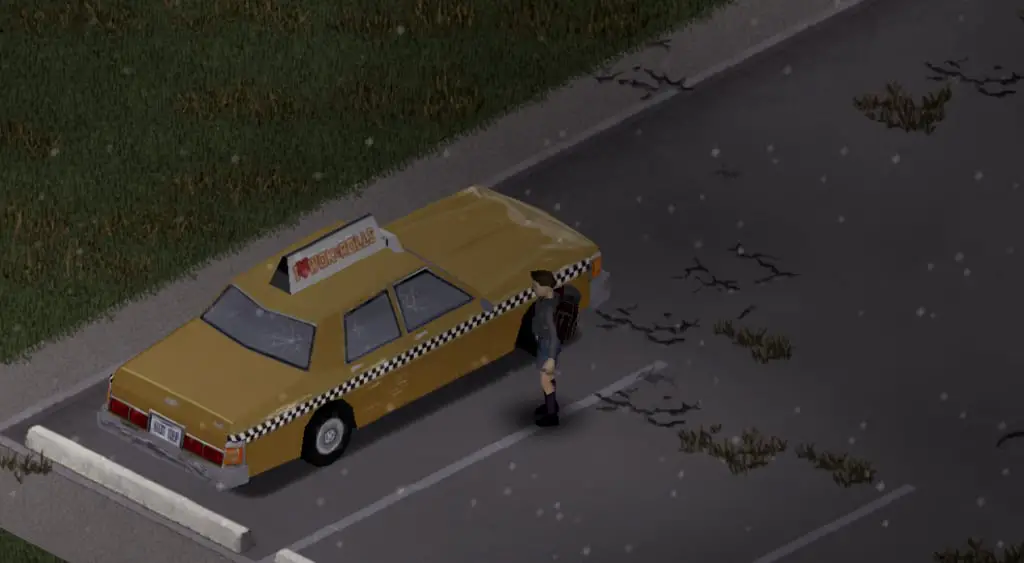
A car is optional on day one. Many beginners die because they chase a vehicle before they have water, a weapon, and a retreat path.
- Key in ignition or in inventory — start normally if the engine and battery allow.
- No key — hotwire if you are Burglar, or if you have Electrical 1 and Mechanics 2 (Build 42.19 vehicle menu). Hotwire is not a separate skill named “Hotwire.”
- Fuel — empty tanks need a gas can and a working pump or siphon plan; do not assume every car is ready to drive across town.
- Condition — low engine quality, missing battery, or flat tires can waste the whole afternoon.
Keys and vehicle details: car key guide.
Common first-hour mistakes
- Treating Firefighter (or any job) as mandatory instead of matching it to your trait budget and play style.
- Leaving the spawn house empty-handed to “rush pharmacy.”
- Assuming a hiking pack will spawn and be fully stocked.
- Believing sterilized rags are lighter than bandages, or that only an iron stove can disinfect.
- Using Caffeine Pills / coffee as a substitute for sleep until severe fatigue ruins combat and escape performance.
- Hotwiring attempts without Electrical 1 + Mechanics 2 (or Burglar), then standing in the street fighting the engine menu.
Where to go next
Related Articles